Hub-Spoke Network Architecture
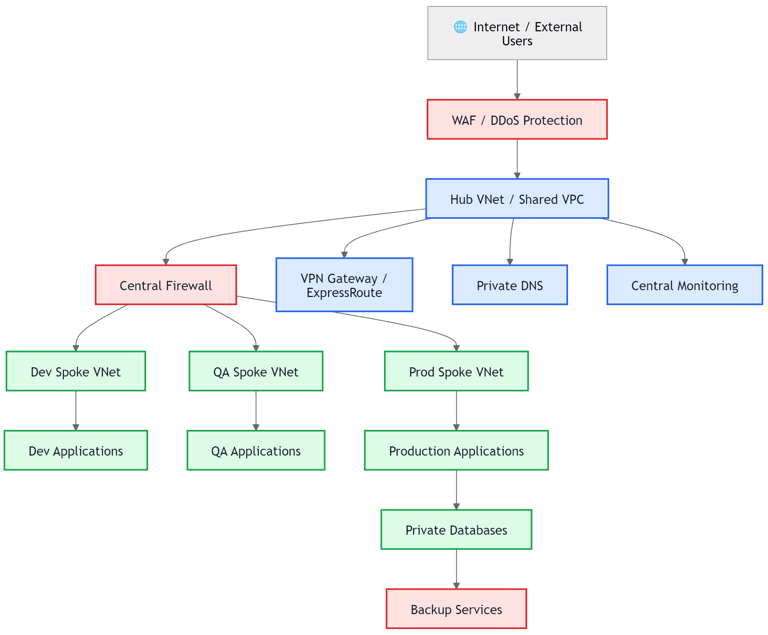
Hub-and-Spoke networking is one of the most widely adopted enterprise cloud networking models.
This architecture centralizes shared network services inside a Hub network while isolating workloads into separate Spoke networks.
The model improves:
Security
Operational control
Network scalability
Governance
Traffic inspection
Hybrid cloud connectivity
Hub-and-Spoke architectures are commonly used in:
Azure Landing Zones
Enterprise Kubernetes platforms
Banking systems
Hybrid cloud deployments
Multi-region enterprise environments
Hub Network
The Hub network acts as the centralized networking core.
Typical Hub services include:
Central Firewall
VPN Gateway
ExpressRoute connectivity
DNS services
Bastion hosts
Monitoring systems
Shared ingress controllers
Security inspection systems
All inbound and outbound traffic is routed through the Hub network.
This allows centralized control and security enforcement.
Spoke Networks
Spoke networks host isolated application workloads.
Separate spokes are typically created for:
Development environments
QA/UAT environments
Production workloads
Shared platform services
Vendor integrations
Benefits include:
Workload isolation
Reduced blast radius
Environment separation
Independent security controls
Easier governance
Each spoke communicates securely through the Hub.
Traffic Flow
Typical traffic flow follows this pattern:
Users → WAF → Firewall → Hub → Spoke Applications
All traffic passes through centralized security inspection before reaching workloads.
This model provides:
Traffic visibility
Threat inspection
Routing control
Security enforcement
Hybrid Connectivity
Enterprise environments often integrate with:
On-premises datacenters
Vendor SaaS platforms
Multi-cloud environments
DR regions
Connectivity methods include:
VPN tunnels
ExpressRoute
Direct Connect
Interconnect
Private endpoints
The Hub network acts as the centralized connectivity gateway.
Security Architecture
Security controls commonly include:
WAF protection
Firewall policies
DDoS protection
Network segmentation
Private subnets
Zero trust networking
Traffic inspection
IDS/IPS systems
Production workloads are typically isolated from direct internet exposure.
Benefits of Hub-Spoke Networking
Centralized network governance
Simplified routing
Secure workload isolation
Improved compliance
Better operational visibility
Scalable architecture design
Easier hybrid connectivity
Conclusion
Hub-and-Spoke networking provides a scalable and secure enterprise networking model for modern cloud environments.
By centralizing connectivity and security services while isolating workloads into separate spokes, organizations can build secure, resilient, and highly governed cloud platforms.
Get in touch
techgalari@gmail.com
☕ Enjoying TechGalary?
Support the creation of free technology guides, tutorials and open-source projects.